Unclasped

During the pandemic, I stopped wearing bras almost by accident. It was one more norm that quietly fell away while the world tilted sideways. Then I got used to breathing without elastic around my ribcage. No smoothing, lifting, corralling. Just my chest, as it is, moving as it wants to.
Now, when I put one on, it feels foreign. Tight. Constricting. Like slipping back into a life I’ve outgrown.
My first bra wasn’t out of need. It was about status, belonging. The girls in my grade were getting them. When their hypercolor t-shirts revealed a strap, I wanted the same. I didn’t question how early the messaging began: chests must be managed, silhouettes must be smooth, and nipples must be invisible.
A friend’s mom once warned us, “You don’t want to be pointing at anyone.” Evidence of nipples, it seemed, was enough to be considered a moral failing. Or worse, a provocation.
By adolescence, hiding my body felt natural. In the locker room, I perfected the lightning-fast routine of changing shirts while revealing minimal skin. I believed my chest was unremarkable, especially compared to the Victoria’s Secret catalogs that piled up at home. So, I deemed myself unattractive. In middle school, high school, college, and beyond.
For me, bras aren’t about physical support. They’re about conformity and camouflage. They tame my physique so no one mistakes my body for something unruly or improper. They cover the parts culture sexualizes and then tells us to hide. For years, I wore them like costume pieces for the pageant of life where I could be feminine but not too feminine, noticeable but only in the right way, and certainly never pointing.
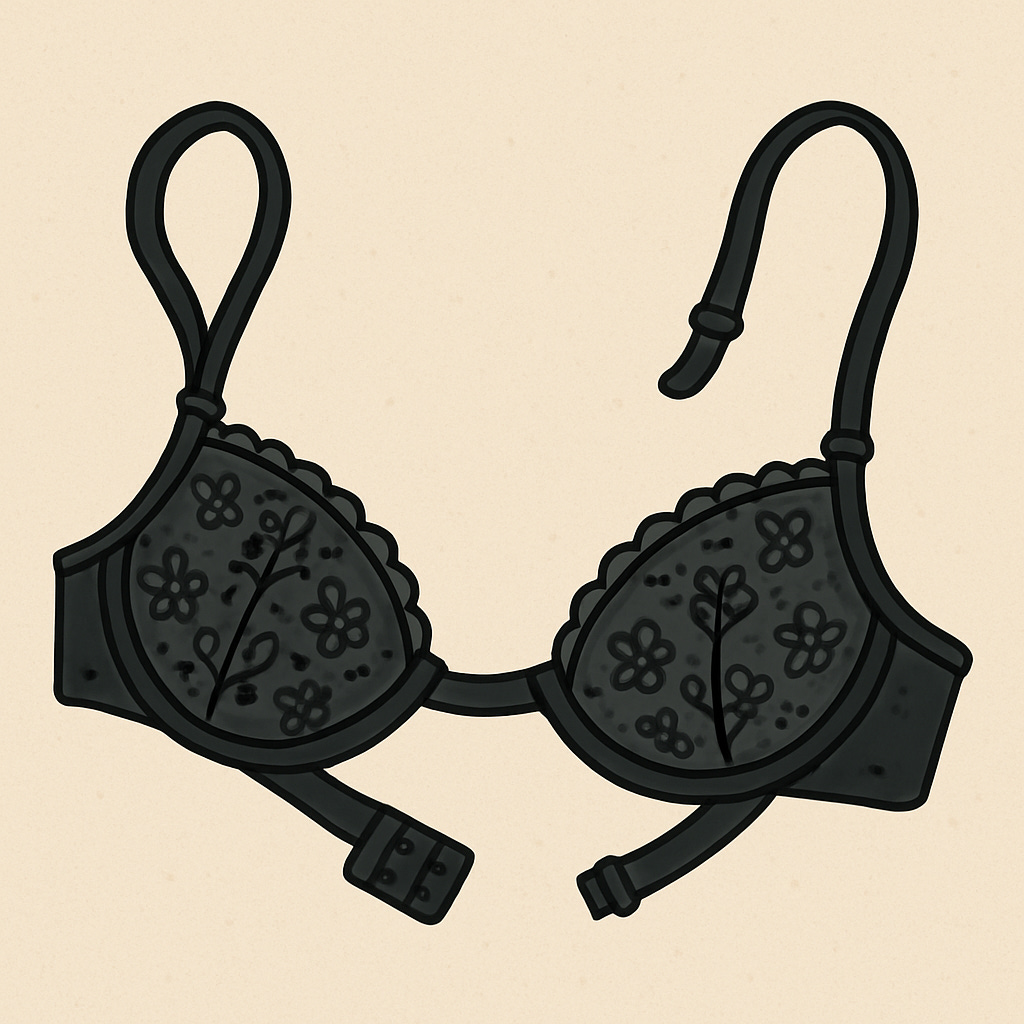
I don’t hate bras as objects. They can be beautiful, fun, mysterious. I dislike the story that says they’re mandatory. That freedom is unprofessional. That comfort is indulgent.
Most days, I now dress for the woman who lives inside my skin instead of the strangers who glance at the outside of it.
🫶